Projects
Positioned to emerge as a top 10 global mining company based on after tax net cash flow, our dominant land position in this highly prospective and sovereign uranium district underlies our strategic advantage in the global uranium sector.
Commanding an expansive >190,000 hectare portfolio in Saskatchewan's southwest Athabasca Basin, Canada.
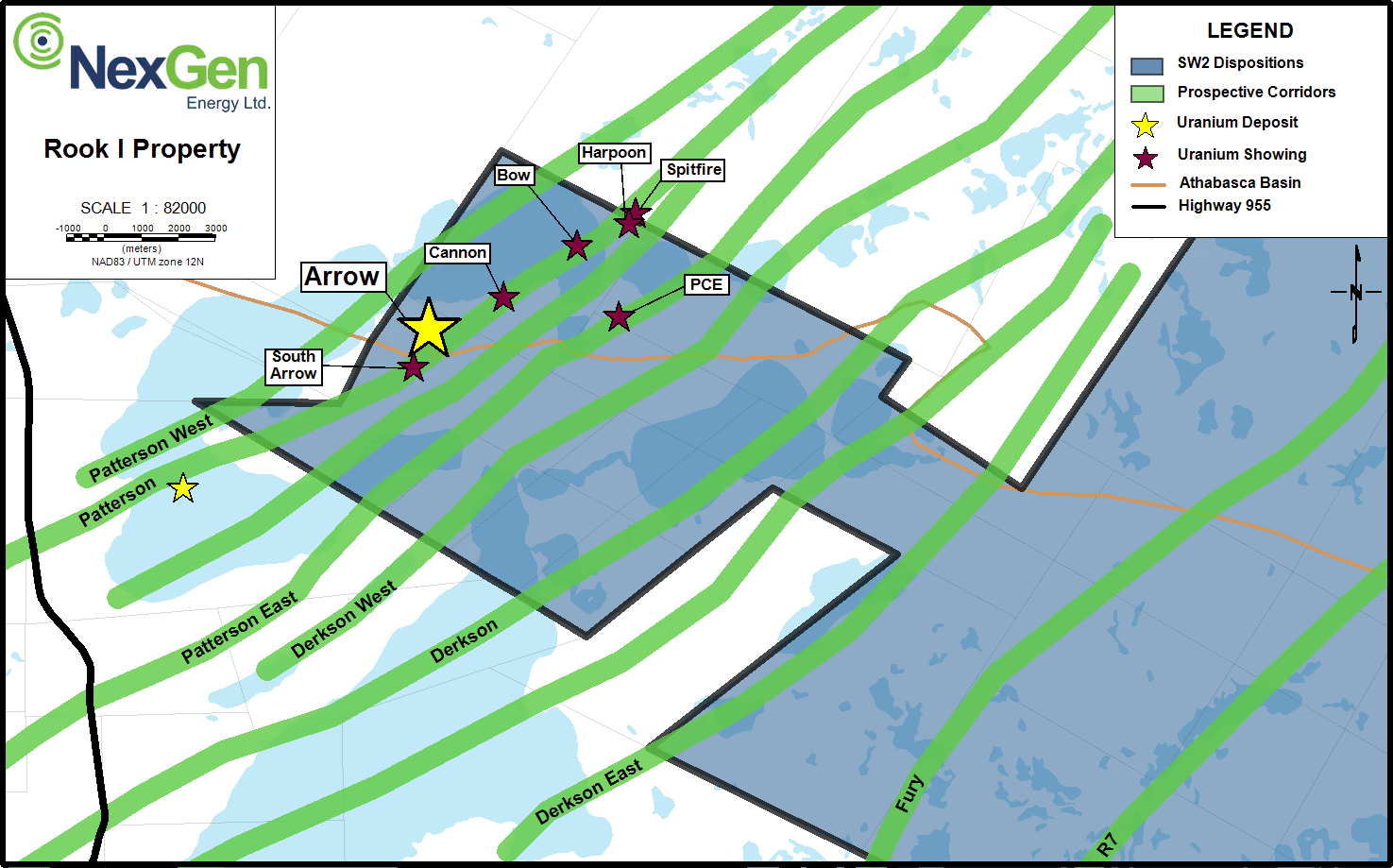
Multiple discoveries made close to existing infrastructure, including "Arrow" (February 2014) and, most recently, the Patterson Corridor East "PCE" discovery (February 2024).
Highly prospective land package including SW1, SW2 and SW3 properties.
Total Measured & Indicated resource of 256.7 Mlbs (inclusive of reserves) and Inferred resource of another 80.7 Mlbs at Arrow.
Active exploration program including a 42,000 m drill campaign at PCE and 3,500 m at SW3. PCE is showing remarkable continuity and geological characteristics analogous to Arrow.
Our Land Package
The southwestern Athabasca Basin is regarded as a premier uranium exploration area due to its high-grade mineralization. Over the past decade, numerous untested targets have been identified through extensive geophysical surveys, showcasing potential for further world-class discoveries.

Momentum continues to build across the world for clean energy solutions and NexGen will be a major contributor to this global movement
Leigh Curyer, Chief Executive Officer, NexGen Energy
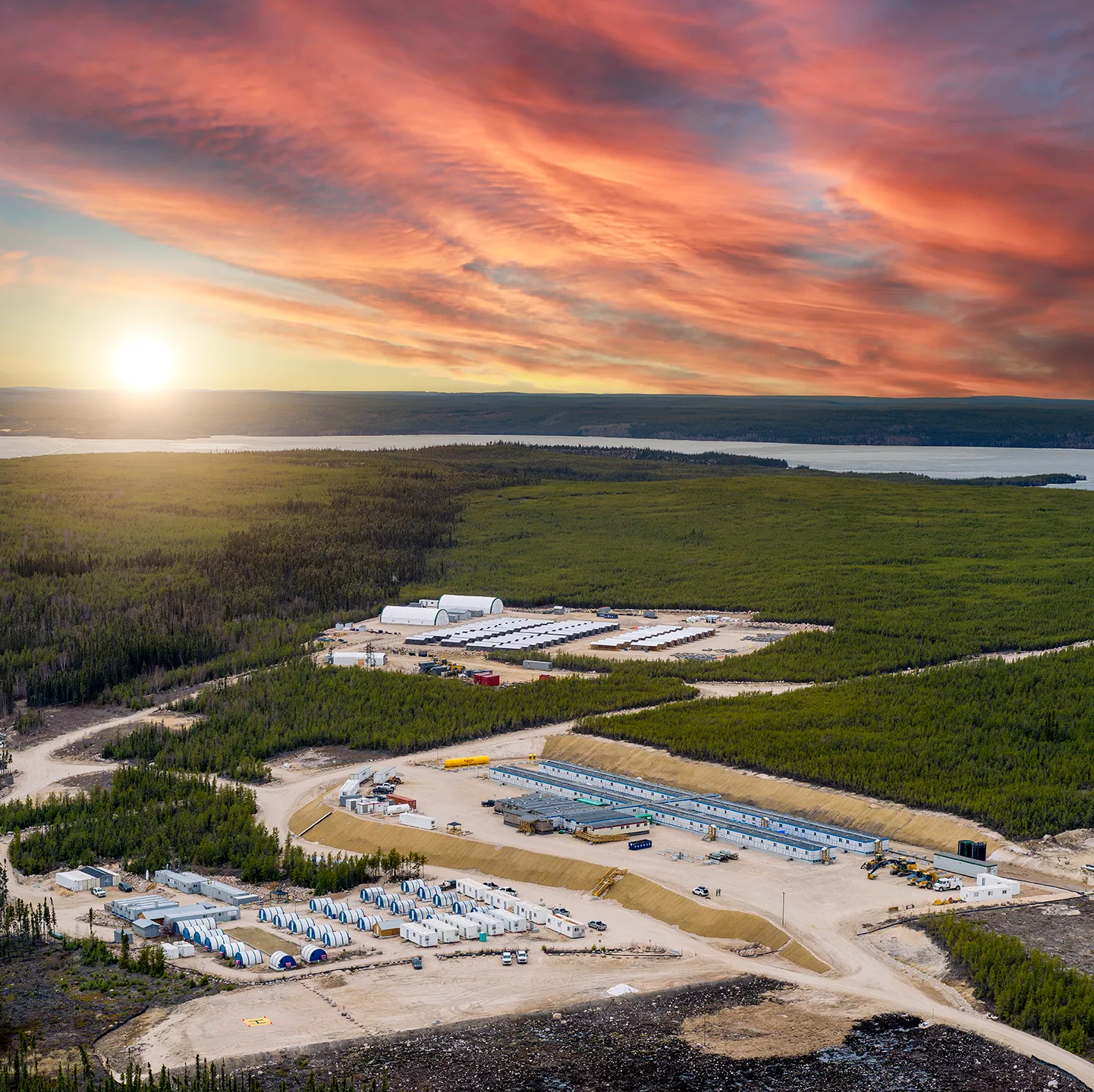
PCE
Property Description
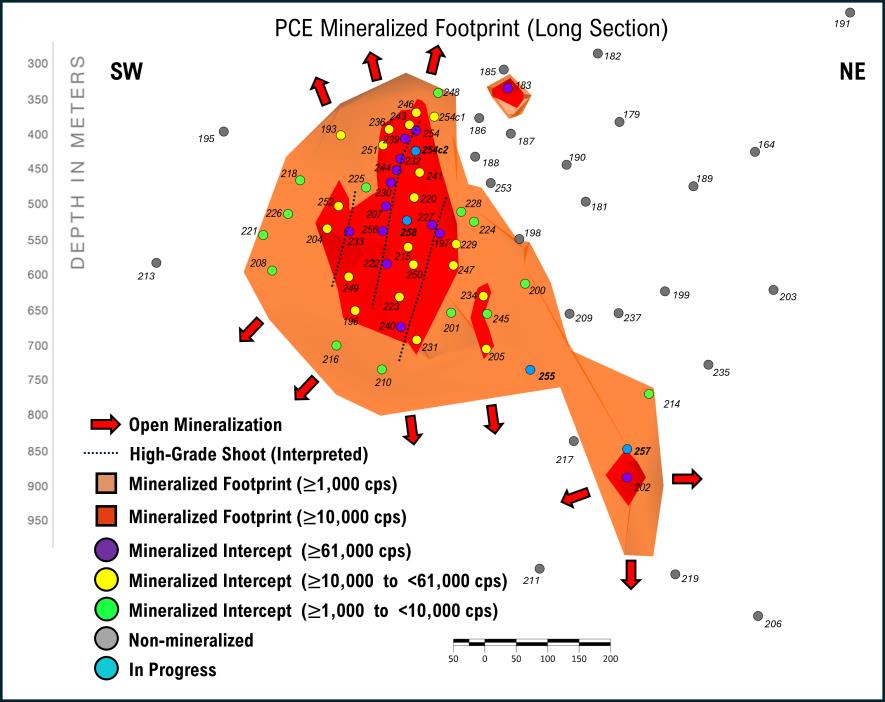
The Patterson Corridor East (PCE) discovery is a high-grade discovery 3.5 km east of Arrow. The system is open in most directions, with mineralization spanning over 600 m in strike length and 600 m vertical depth-, extent with 19 of 30 holes intersecting mineralization including 10 holes with multiple intervals >10,000 cps.
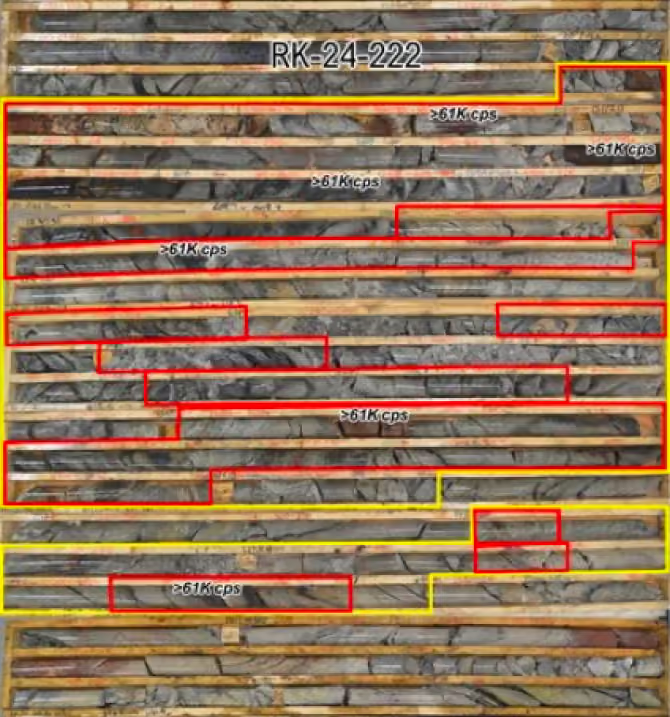
The best hole to date at PCE (RK-24-222) returns 17.0 m wide vein with multiple high intensity (>61,000 cps) occurrences. (learn more)
Ongoing efforts at PCE focus on testing the extents of mineralization through bold step outs, and vectoring in on high-grade zones within the broader mineralized system.
Geological Characteristics
- Mineralized signature analogous to Arrow
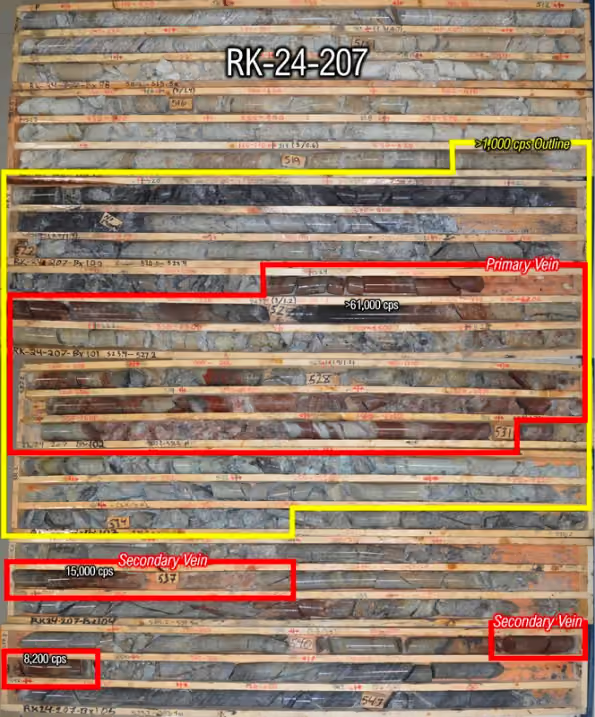
- Semi-massive to massive pitchblende veins, fracture coatings, and disseminations (up to off-scale >61,000 cps) hosted exclusively within crystalline basement rocks
- Well-developed hydrothermal fluid system – hematite, limonite, clay, and chlorite alteration
- Formation conditions linked to significant orebodies within the Athabasca Basin
Feasibility Study (FS)
Summary of Completed Geophysical Surveys
Current Exploration
Disclaimer
Other
February 2024
Greenfield
High-grade, basement-hosted discovery
In 2026, PCE is the largest drill program in the Athabasca Basin by any Company at 42,000 metres (m)
Southwest Athabasca Basin, Saskatchewan. Canada