By Arjun Pillai
Prince Albert Daily Herald, 13 August 2026
The Saskatchewan government is defending its plan to extend coal-fired power generation, rejecting criticism from the Opposition NDP that the strategy could cost the province at least $26 billion.
The response comes after Saskatchewan NDP Leader Carla Beck and SaskPower critic Aleana Young brought the party’s Grid and Growth Plan to Prince Albert last week, pitching it as an alternative approach to the province’s electricity future.
In a statement provided to the Daily Herald after the event, Minister Responsible for SaskPower Jeremy Harrison said the NDP’s comparison is based on “unrealistic assumptions” and does not fairly represent the cost of extending coal generation.
“The estimated capital cost of extending the life of Saskatchewan’s existing coal generation is approximately $2.6 billion,” Harrison said.
He said the NDP’s $26-billion figure includes approximately 25 years of operating, maintenance, fuel and transmission costs in addition to capital spending.
“Every generation asset, whether it is natural gas, hydroelectricity, wind, solar or nuclear, incurs operating and maintenance costs over its lifetime,” Harrison said.
The government argues extending existing coal plants will provide reliable generation while Saskatchewan develops nuclear power, while also avoiding the immediate cost of replacing that capacity.
Glenn Wright, a Saskatchewan mechanical engineer, lawyer and farmer who has followed electricity policy for more than a decade, said looking only at the initial capital cost does not provide a complete comparison.
“I think the NDP’s comparison is fair, and I think the government is hiding behind this capital costs figure,” Wright said.
He said long-term electricity planning should look at lifecycle costs, including capital, fuel, operations and maintenance.
The two sides also disagree over reliability.
Harrison said the NDP proposal would remove nearly one-third of Saskatchewan’s dispatchable baseload generation. While wind and solar have a role, he said they cannot independently provide electricity whenever it is needed.
“Reliability must come first,” Harrison said.
Wright said the electricity system is changing and questioned whether the traditional idea of relying heavily on centralized baseload generation should continue to drive long-term planning.
He pointed to distributed generation, demand management, smart-grid technology and stronger connections with neighbouring provinces as tools that could support a changing electricity system.
Wright also questioned the government’s argument that coal can serve as a bridge until nuclear generation is available.
He said money spent refurbishing coal plants could become stranded if the plants become uneconomical before the end of their expected operating lives. He also questioned how quickly new nuclear generation could realistically be developed in Saskatchewan.
The government maintains its approach is intended to avoid that uncertainty.
Harrison said the government’s Saskatchewan First Energy Security strategy includes coal life extensions, additional natural gas generation, renewable energy, transmission upgrades and development of nuclear power using Saskatchewan uranium.
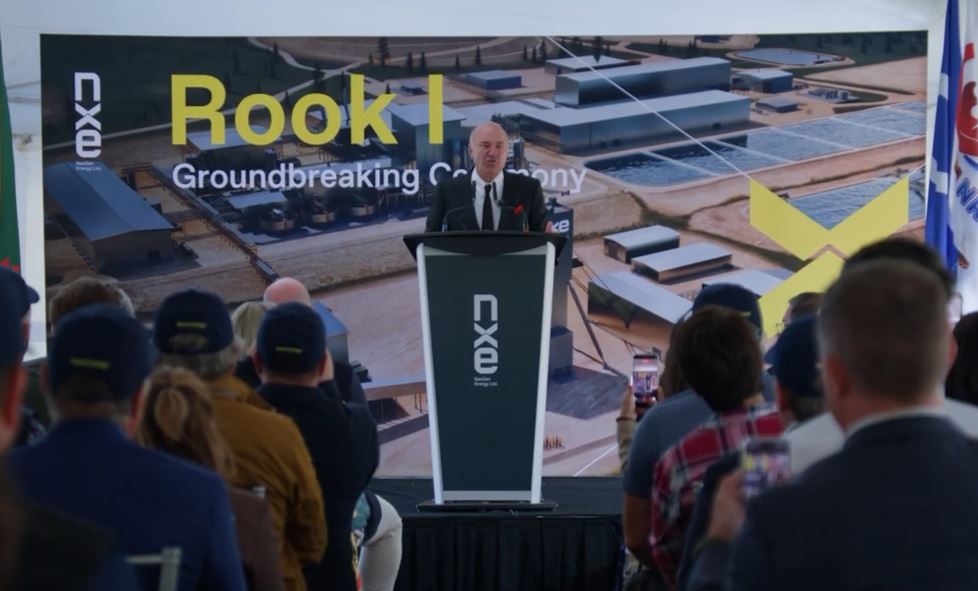
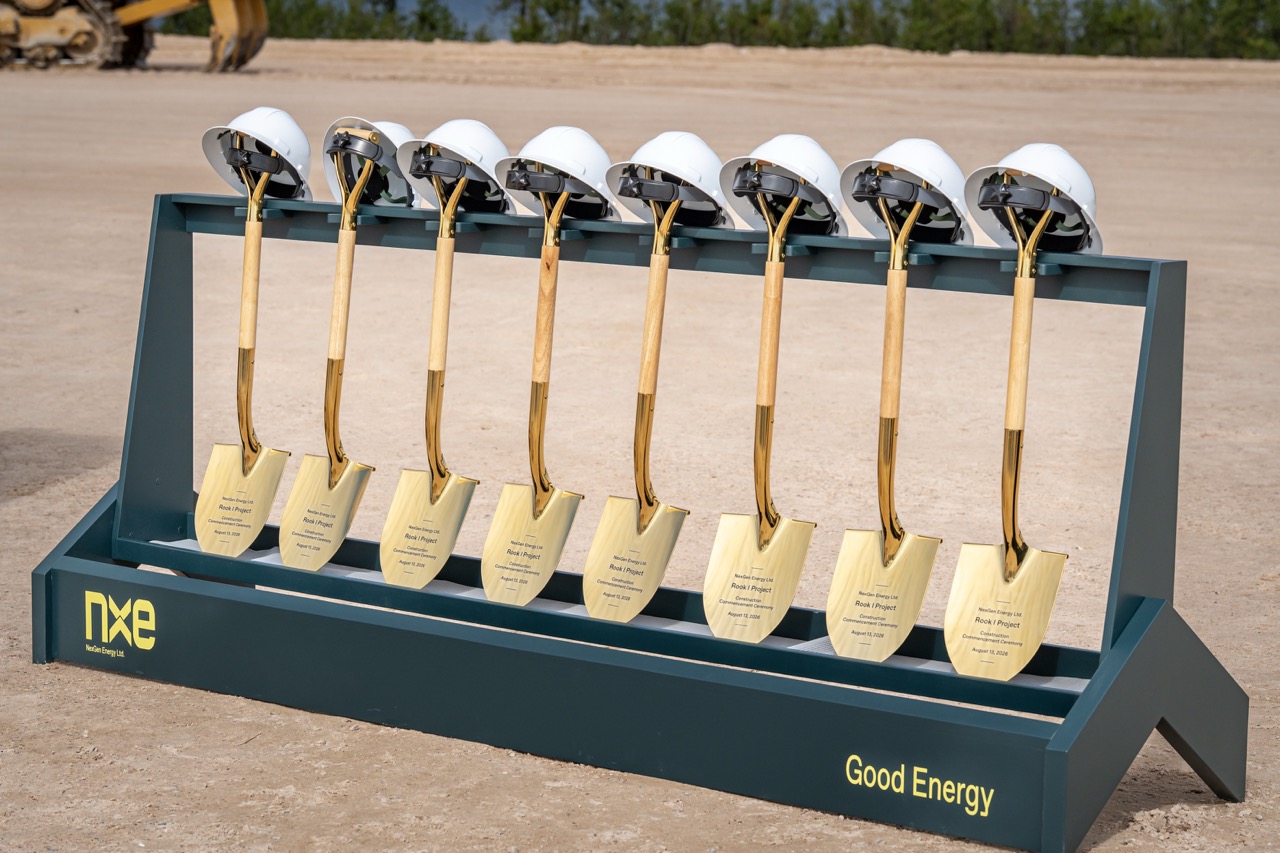
That emphasis on Saskatchewan uranium comes as NexGen Energy moves ahead with its $2.2-billion Rook I uranium project in the Athabasca Basin. Premier Scott Moe was expected to attend a groundbreaking ceremony for the project Thursday, along with federal Secretary of State Buckley Belanger and other officials.
The government also argues the NDP plan would leave Saskatchewan increasingly dependent on imported electricity.
Wright sees stronger interprovincial connections differently. He said expanding Saskatchewan’s ability to exchange electricity with neighbouring provinces could strengthen reliability and create more opportunities to buy and sell power when needed.
Hydroelectricity was another issue raised during the Prince Albert discussion.
The government pointed to refurbishment work at the E.B. Campbell Hydroelectric Station as an example of continued investment in hydroelectric generation.
Wright said maintaining existing facilities such as E.B. Campbell is important, but Saskatchewan should also examine other potential hydro opportunities while taking their environmental impacts into account.
He said conservation and reducing demand should also be part of electricity planning.
The debate also extends to electricity produced by individual customers.
Harrison said SaskPower’s Net Metering Program has been extended through 2029 and said the government supports customer-owned generation while ensuring costs remain fair to all ratepayers.
Wright’s partner, Shannon Wright, a member of Climate Justice Saskatoon and SaskPower net-metering customer who has rooftop solar installed at her home and advocates for greater access to small-scale solar, said accessibility remains one of the largest barriers for homeowners.
She said conventional rooftop systems can involve assessments, electricians and installation costs, and suggested Saskatchewan eventually examine simpler forms of small-scale solar that could lower the barrier for households interested in producing some of their own electricity.
“The price of panels has come down substantially,” she said. “I think panels aren’t necessarily the hurdle to installation.”
She said the larger obstacle can be the cost and complexity of having an entire rooftop system professionally installed.
The NDP has said its Grid and Growth Plan is intended to keep electricity costs lower while shifting Saskatchewan toward a mix of natural gas, renewable generation, transmission and eventually nuclear power. Young described the plan during her Prince Albert visit as an alternative to the government’s electricity strategy.
The government, however, says its strategy would provide greater reliability and affordability.
“Our government is pursuing a practical, Saskatchewan-first plan that keeps electricity reliable, affordable, and secure while preparing for the future through natural gas, renewables, and nuclear power,” Harrison said.